
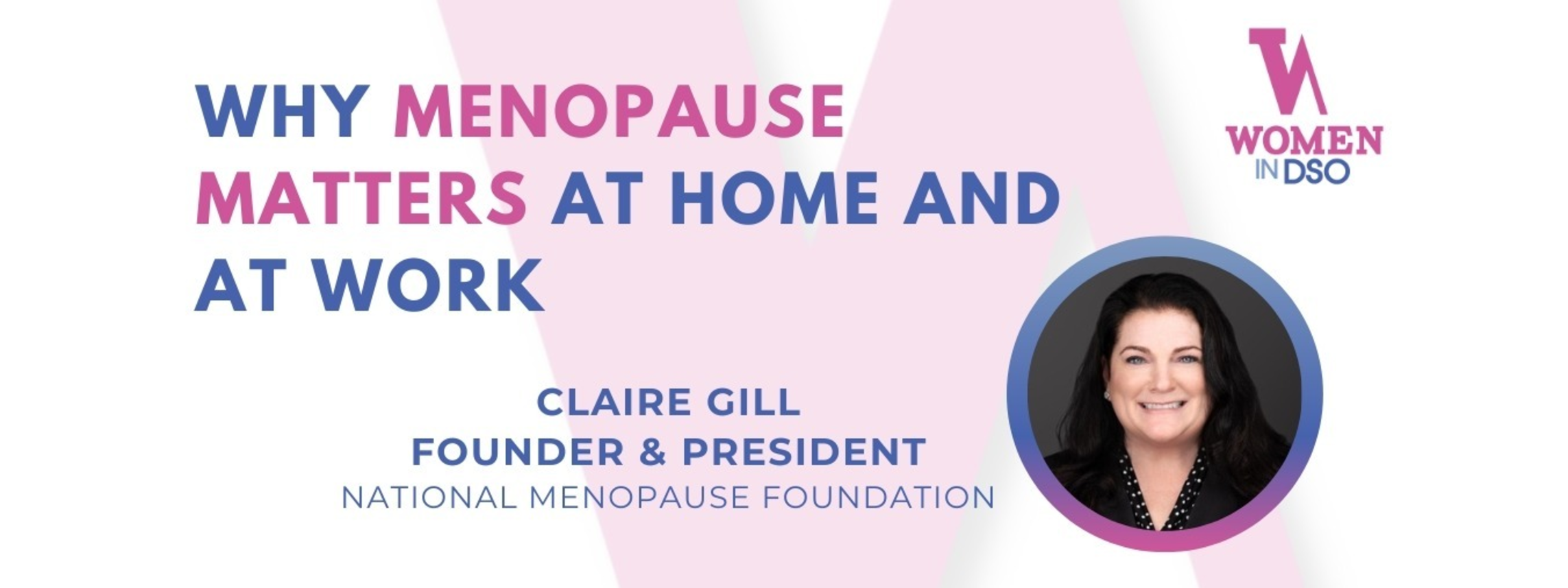
Why Menopause Matters at Home and at Work
Thank you to Women in DSO for inviting me to lead a wellness workshop. What stayed with me afterward wasn’t any single question, but how familiar they all felt. The stories women shared that day echoed what I hear in nearly every room I walk into: women want clear, trustworthy information about menopause, and they want it before symptoms arrive, not after they’ve spent months wondering what on earth is happening to them.
So, let’s start with the basics, because 45% of women say they couldn’t explain the difference between perimenopause and menopause until they’re already living it. Perimenopause is the transition leading up to your final period, and it can last anywhere from three to seven years. Menopause is a single point in time: the day you’ve gone 12 consecutive months without a period. The average age in the U.S. is 51, though for some of us it arrives earlier through genetics, surgery, chemotherapy, or other medical reasons.
And the symptoms reach far beyond hot flashes. Roughly 90% of women over 35 experience symptoms, which can include night sweats, disrupted sleep, mood changes, anxiety, brain fog, joint pain, weight gain, and genitourinary changes that affect comfort and intimacy. About 80% of women have hot flashes, and the average woman lives with them for a full decade. Yet 73% of women aren’t treating their symptoms at all.
Part of the reason is that our medical system simply isn’t ready for us. Fewer than 20% of primary care physicians and only about 31% of OB-GYN residency programs offer formal menopause training. Medical students often receive an hour or less on the subject, and under 7% of new residents in internal medicine, family medicine, or OB-GYN feel prepared to treat it. If you’ve ever left an appointment feeling dismissed, please hear me: it is not all in your head.
Here is the more hopeful truth. So much of what helps is already within reach. Regular physical activity, strength training, and a Mediterranean-style diet support weight, mood, sleep, and heart health all at once. Cognitive behavioral therapy has strong evidence for both hot flashes and insomnia. For vaginal dryness and painful intercourse, low-dose vaginal estrogen is safe for nearly all women and can be used on its own. And hormone therapy is the right choice for many women, well worth an honest conversation with a knowledgeable clinician. The point I want every woman to hold onto is this: no one should suffer in silence when good options exist.
This is also where menopause becomes bigger than any one woman’s experience. One in four U.S. workers is in some phase of the menopause transition right now. Nearly 77% of women aged 45 to 54 are in the labor force, which is exactly the window when so many are stepping into senior leadership. And yet 1 in 5 women has considered leaving her job because of symptoms, and 13% already have. All told, untreated menopause costs the U.S. economy an estimated $26.6 billion a year in lost productivity and medical expenses.
For an industry like dentistry, where women make up so much of the workforce and the leadership pipeline, this is a retention issue and a leadership issue. When we lose women at the very peak of their careers, we lose decades of investment, talent, and hard-won experience. The encouraging news is that small, practical changes make a real difference: flexible hours, temperature and rest-space accommodations, menopause-informed care built into health plans, and managers who can talk about this without awkwardness. Only 22% of employers currently offer any menopause-related benefit, which means the organizations that act now will stand out to the very women they most want to keep.
If you’re curious where your own organization stands, the National Menopause Foundation offers a free, confidential Workplace Menopause Support Benchmark Tool. It scores you across five pillars in about 15 minutes and returns a maturity report with practical next steps.
Resources I mentioned during our session:
Workplace Benchmark Tool (NMF): nationalmenopausefoundation.org/inspiration/workplace-resources
National Institute on Aging: nia.nih.gov/health/menopause
HHS Office on Women’s Health: womenshealth.gov/menopause/menopause-resources
The Menopause Society (find a certified practitioner): menopause.org
SWHR Menopause Preparedness Toolkit: swhr.org/resources/menopause-preparedness-toolkit
And finally, if this topic moves you the way it moves me, I’d love for you to consider joining our new Voice for MidLife™ Peer Educator Program. It’s a first-of-its-kind national certificate program that trains women to educate their peers about perimenopause and menopause right in their own communities. You can sign up to learn more here: NMF Peer Educator sign-up.
Menopause touches every woman who lives long enough, and it touches every workplace she’s part of. The more openly we talk about it, the healthier and stronger our teams become. Thank you, Women in DSO, for giving this the attention it so deserves.